Tell Me a Story! Helping Children Develop Narrative Skills
"What did you do at school today?"
If your child has ever answered this question with a simple "Nothing!" or launched into a story that jumps from one event to another, you're not alone. Learning to tell a story is a skill that develops over time, and it's an important part of a child's language development.
The ability to tell a story, known as narrative language, is much more than simply talking. It involves organising thoughts, remembering events, using appropriate vocabulary, and putting ideas together in a way that makes sense to the listener. These skills begin to emerge as early as two years of age, and by around five years, many children can retell familiar stories in their own words.
Although we often associate storytelling with books, children use narrative skills throughout the day. Whether they're telling you about a trip to the park, explaining how they built a tower, describing what happened at school, or giving instructions during play, they're practicing important language skills that lay the foundation for later literacy.

Grab your FREE Higher Language Crossword
-
Grab your FREE Higher Language Crossword -
What are the signs of challenges with narration skills?
Some children naturally need more support to develop narrative skills. Signs that a child may be experiencing difficulties include:
Jumping from one topic to another while telling a story.
Leaving out important information or including unrelated details.
Using very general words such as thing or stuff instead of more specific vocabulary.
Finding it difficult to put events into the correct order.
Needing lots of questions from the listener before the story makes sense.
Because narrative skills are closely linked to reading comprehension, writing, and classroom learning, early support can make a significant difference.
Why are narrative skills important?
Narrative skills support much more than storytelling. As children become better at organising and expressing their ideas, many other language skills develop alongside them.
Children begin to understand that stories have a structure, with a beginning, middle, and end. They learn to include important elements such as characters, settings, problems, and solutions, and start using words like first, next, then, and finally to connect their ideas. Their sentences gradually become longer and more complex as they learn to use conjunctions such as because, but, and so.
Narrative development also strengthens children's ability to make predictions and draw conclusions from what they hear or read. These inferencing skills are essential for reading comprehension and academic learning. At the same time, storytelling supports social communication by helping children learn how to share information clearly and in a way that others can easily follow (Taylor, n.d).
Supporting narrative skills through everyday experiences
The good news is that everyday routines provide countless opportunities to develop narrative skills. How can this be supported?
1. Talk through daily routines
Children learn a great deal by hearing language used during familiar activities. Describe what you're doing as you brush your teeth, make breakfast, or bake together. For example, you might say, "First we wash our hands. Next, we get the ingredients. Then we mix everything together. Finally, we put the cake into the oven." As your child becomes more familiar with the routine, encourage them to explain the steps back to you.
2. Teach the ideas of beginning, middle, and end
These concepts can first be introduced during play. You might place toys in a line and talk about which one is at the beginning, in the middle, or at the end.
Once your child understands these concepts, use them when talking about everyday events.
"At the beginning of the day it was sunny, in the middle it started to rain, and by the end the sun came out again."
Helping children understand sequence makes it easier for them to organise stories later on.
3. Use photographs to tell stories
Photos are a wonderful way to support storytelling because they provide a visual reminder of what happened.
Take three or four pictures while your child is playing with playdough, baking, washing their hands, or building with blocks. Afterwards, look through the photos together and encourage your child to describe what happened from beginning to end.
Visual supports often help children organise their thoughts and reduce the pressure of remembering every detail.
4. Read books together
Reading stories together is one of the best ways to build narrative skills.
Instead of simply reading the words, pause to talk about the story. Ask questions such as, "Who is in the story?", "Where are they?", or "What do you think will happen next?" Encourage your child to make predictions and share their ideas.
After finishing the book, see if they can retell the story in their own words. Using puppets, toys, or role play can make retelling even more enjoyable and engaging.

5. Carry Out Structured Narrative Activities
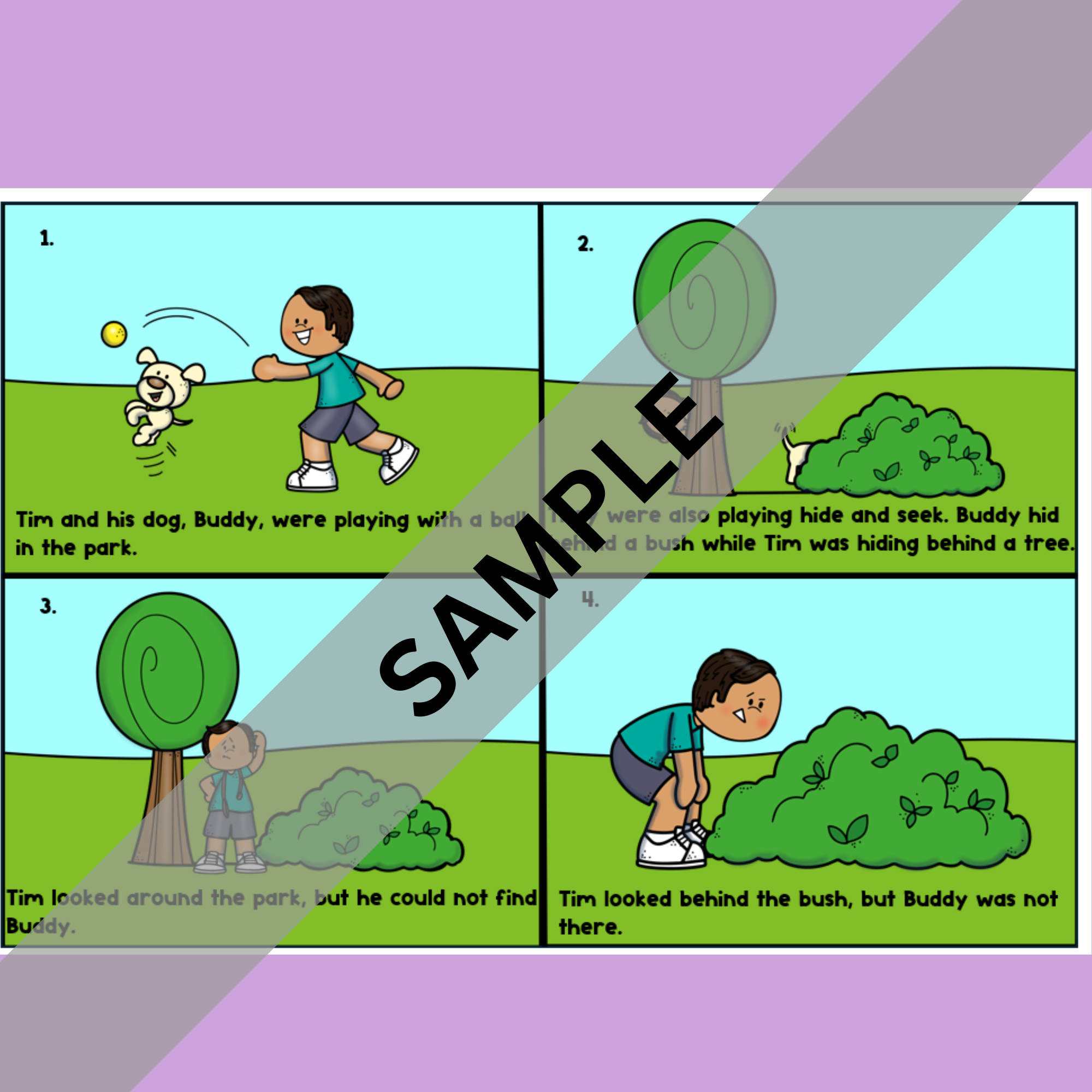
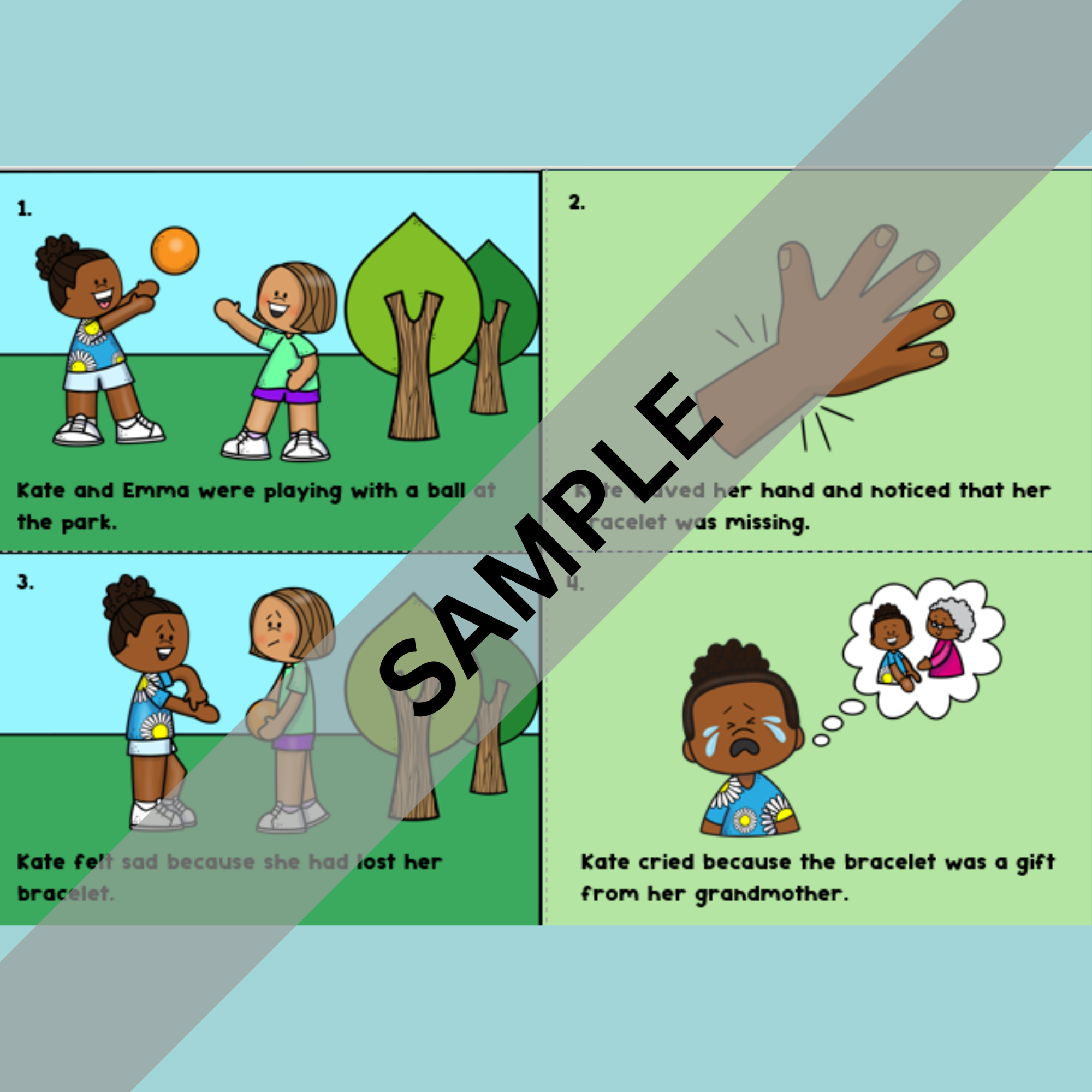
Providing children with structured opportunities to practise storytelling can make a real difference to their narrative development. Activities that encourage sequencing, answering WH questions, making inferences, and retelling stories help children organise their thoughts and build confidence when communicating.
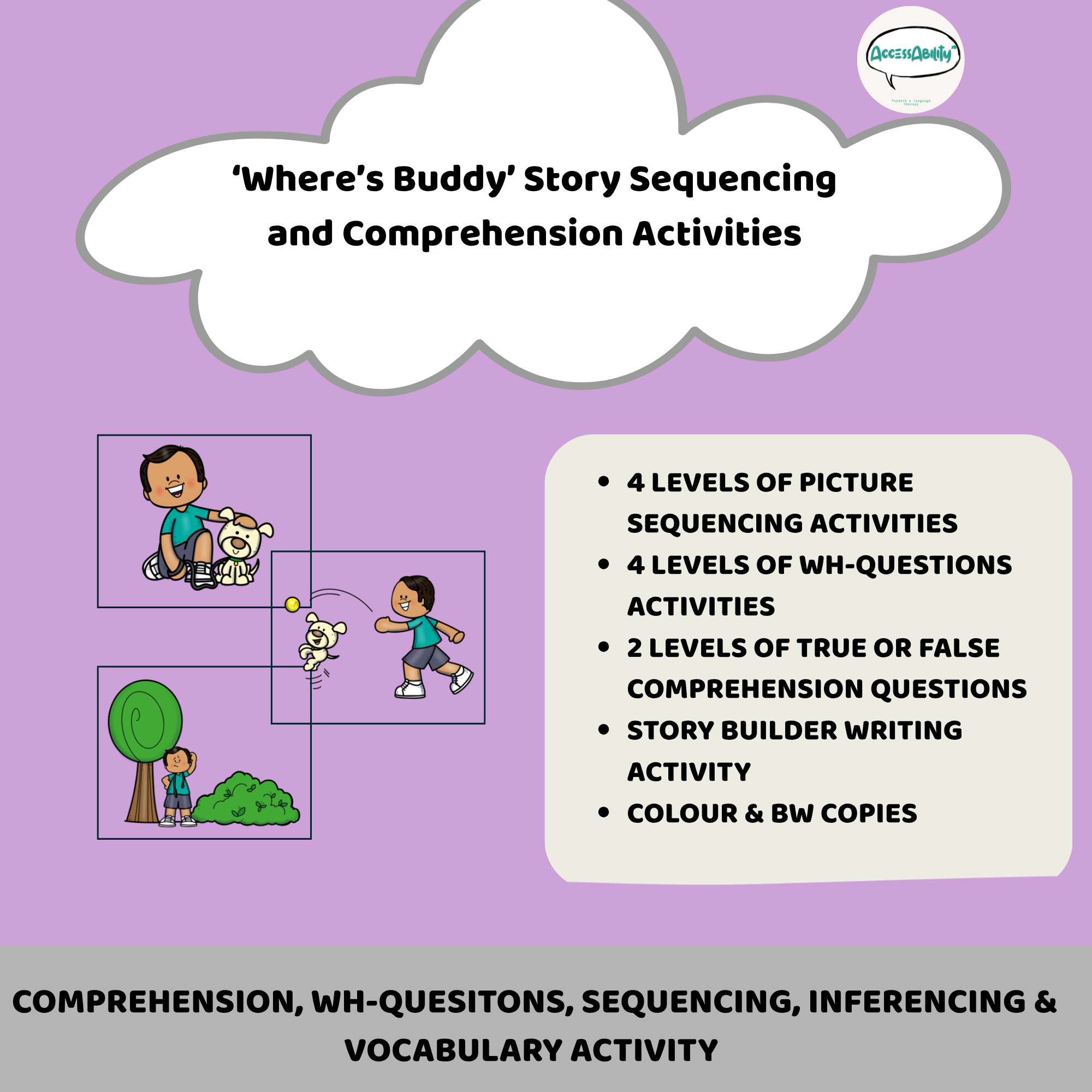
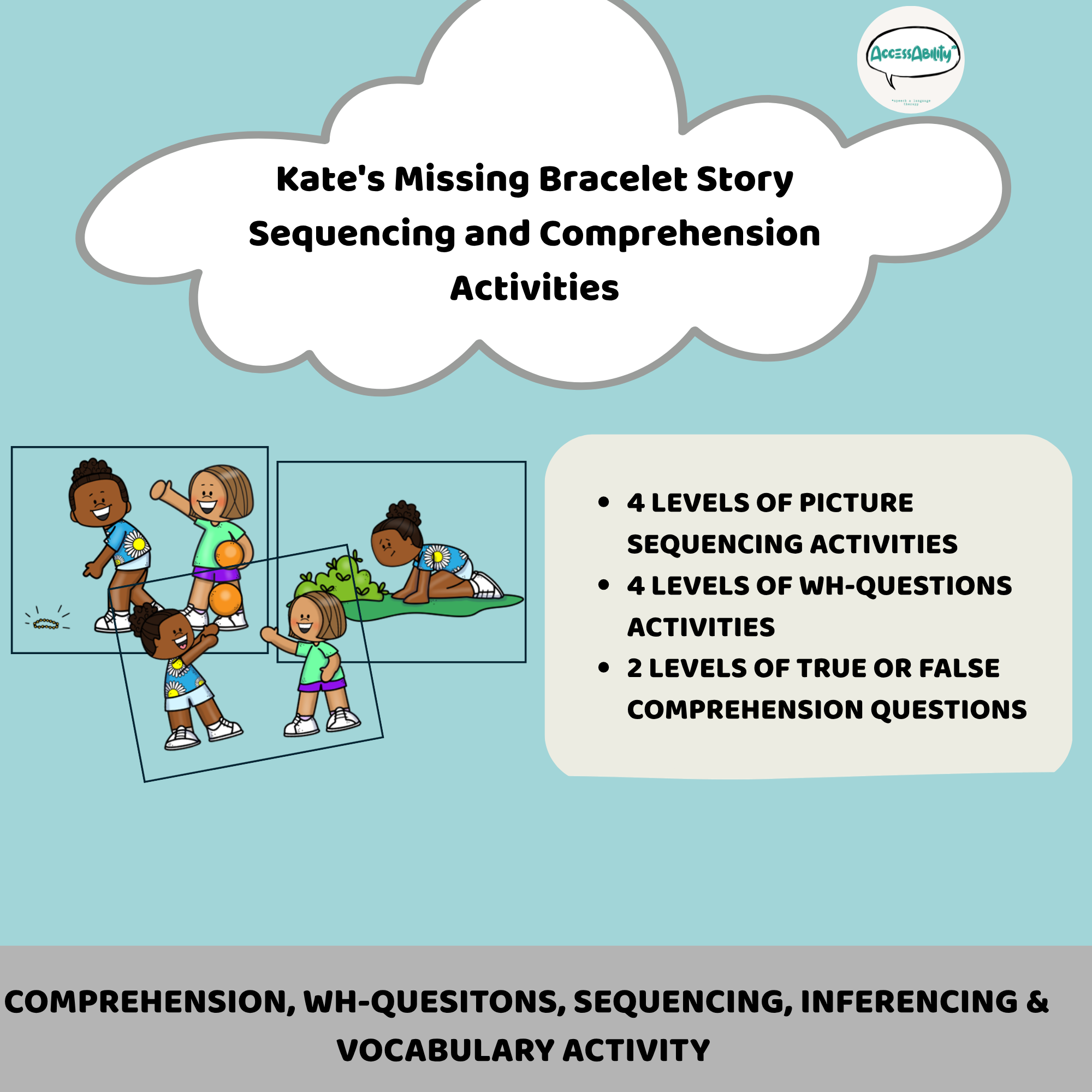
We've recently developed two story based narrative resources that target these skills through engaging, differentiated activities, making them suitable for a range of language abilities in therapy, the classroom, or at home. Both stories, ‘Kate’s Missing Bracelet’ and ‘Where’s Buddy?’ are engaging, structured, and easy to implement!
Interested in trying them? Click HERE or HERE to explore our narrative resources.
Every Conversation Counts
Developing narrative skills doesn't happen overnight, and children don't need to tell perfect stories. Like any other skill, storytelling develops through practice, encouragement, and meaningful conversations.
Whether you're reading a bedtime story, looking through family photos, chatting about your day, or baking together in the kitchen, you're helping your child learn how to organise their thoughts, express their ideas, and communicate with confidence. These everyday moments may seem small, but they are building the language and literacy skills that children will use for years to come.
References
Speech and Language UK. (n.d.). Support children's story-telling skills. Retrieved June 25, 2026, from https://speechandlanguage.org.uk/educators-and-professionals/resource-library-for-educators/support-childrens-story-telling-skills/
State Government of Victoria, Department of Education. (n.d.). Stories and narratives. Literacy Teaching Toolkit: Early Childhood. Retrieved June 25, 2026, from https://www.vic.gov.au/literacy-teaching-toolkit-early-childhood/learning-foci-interacting-others/stories-and-narratives