Why AAC Should Not Be a Last Resort in Neurodegenerative Conditions
When discussing neurodegenerative conditions such as Amyotrophic Lateral Sclerosis (ALS), Parkinson's disease, Huntington's disease, and Primary Progressive Aphasia (PPA), communication is often overlooked until speech becomes severely affected. However, preserving communication should not begin when speech is lost. In fact, the earlier Augmentative and Alternative Communication (AAC) is introduced, the better.
AAC and its Uses
Augmentative Alternative Communication (AAC) refers to any tool, strategy, or system that supports an individual's ability to communicate. Contrary to popular belief, AAC is not limited to electronic devices. It encompasses a wide range of approaches, from simple communication boards to advanced eye gaze technology.
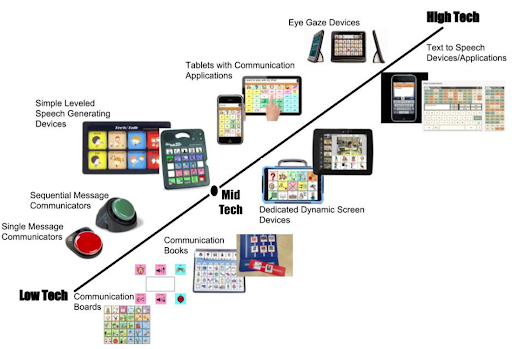
Image taken from - THE Basics of Alternative and Augmentative Communication (AAC) “WHAT?” “WHO?” “WHERE?” “WHEN?” “WHY?” - Speech-Language and Audiology Association of Trinidad and Tobago
Implementing AAC
For individuals living with progressive neurological conditions, communication needs change over time. This means that a combination of low-tech and high-tech AAC options is often beneficial. Low-tech systems may include alphabet boards, communication books, picture boards, or E-Tran frames. These tools are inexpensive, portable, and can serve as valuable communication supports, particularly when technology is unavailable or when fatigue limits device use.
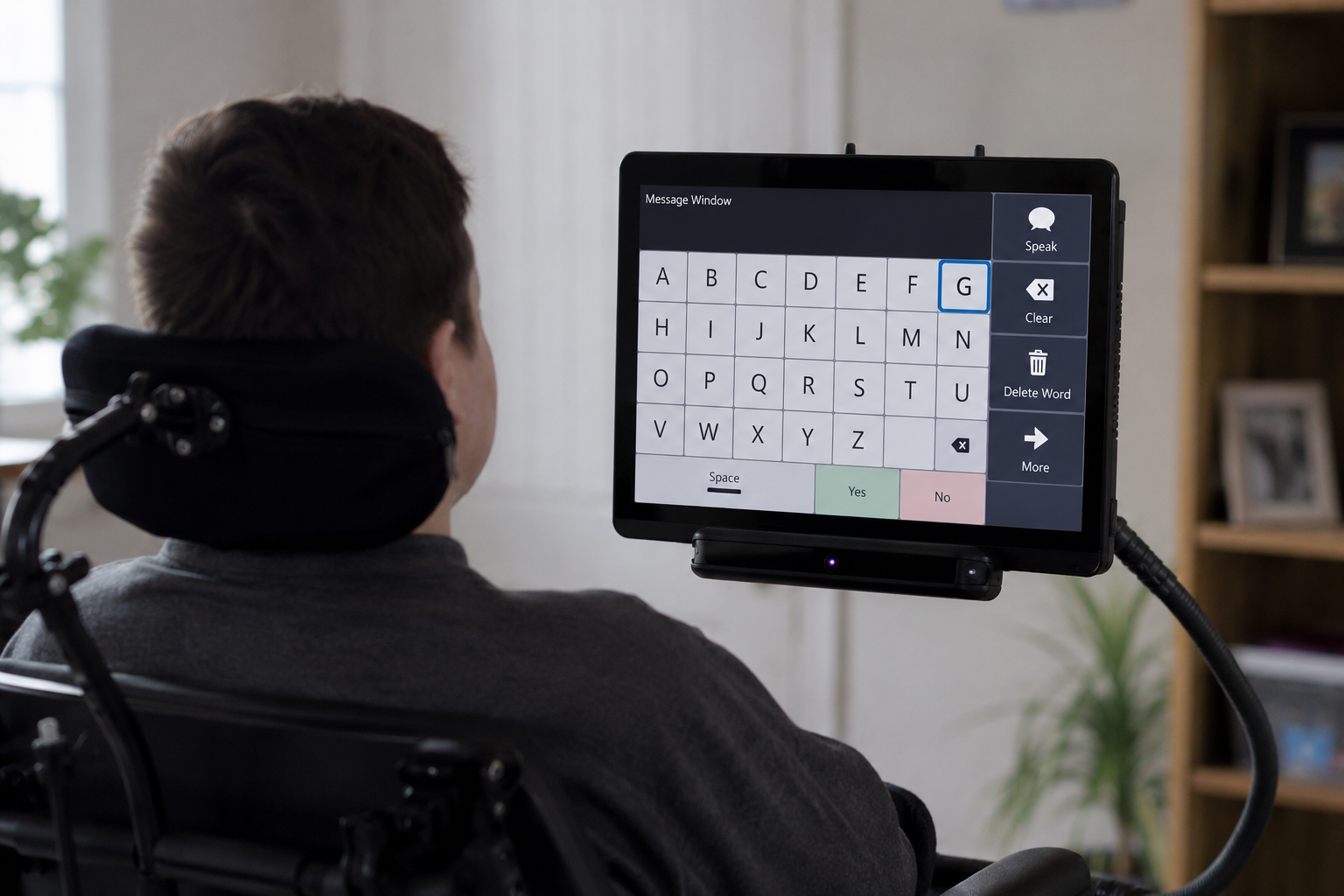
High-tech AAC systems provide additional opportunities for communication and independence. Tablet-based applications and dedicated speech-generating devices allow individuals to express wants, needs, opinions, and emotions more efficiently. As physical abilities decline, some individuals may transition to eye gaze systems, which enable communication through eye movements alone. For many people with conditions such as ALS, these systems allow communication to continue long after speech and hand function have been significantly affected.
Luckily (and in other cases not so luckily), technology is moving at a breakneck speed. More options are now available than ever before. Simple and inexpensive tablets and systems are now introducing eye gaze and eye tracking into their system. Giants like Apple and Microsoft have developed built-in, hands-free technology that allows users to not only communicate but also browse the internet, navigate apps, and operate AAC software.
Voice & Message Banking
One aspect of AAC that is gaining increasing attention is voice banking. Voice banking involves recording a person's own voice while speech is still relatively clear. Using specialised technology, these recordings can later be synthesised into a digital voice that closely resembles the individual's natural speech. This voice can then be incorporated into speech-generating devices and eye gaze systems, allowing the individual to continue communicating using a voice that is uniquely their own.
Message banking offers another valuable means of preserving identity. Unlike voice banking, message banking involves recording meaningful phrases, jokes, greetings, and expressions in the person's own voice. These messages may hold significant emotional value for both the individual and their loved ones. Hearing a familiar voice say "I love you," wish someone a happy birthday, or share a favourite saying can have a profound impact on quality of life.
Beyond the ‘Basic Needs’
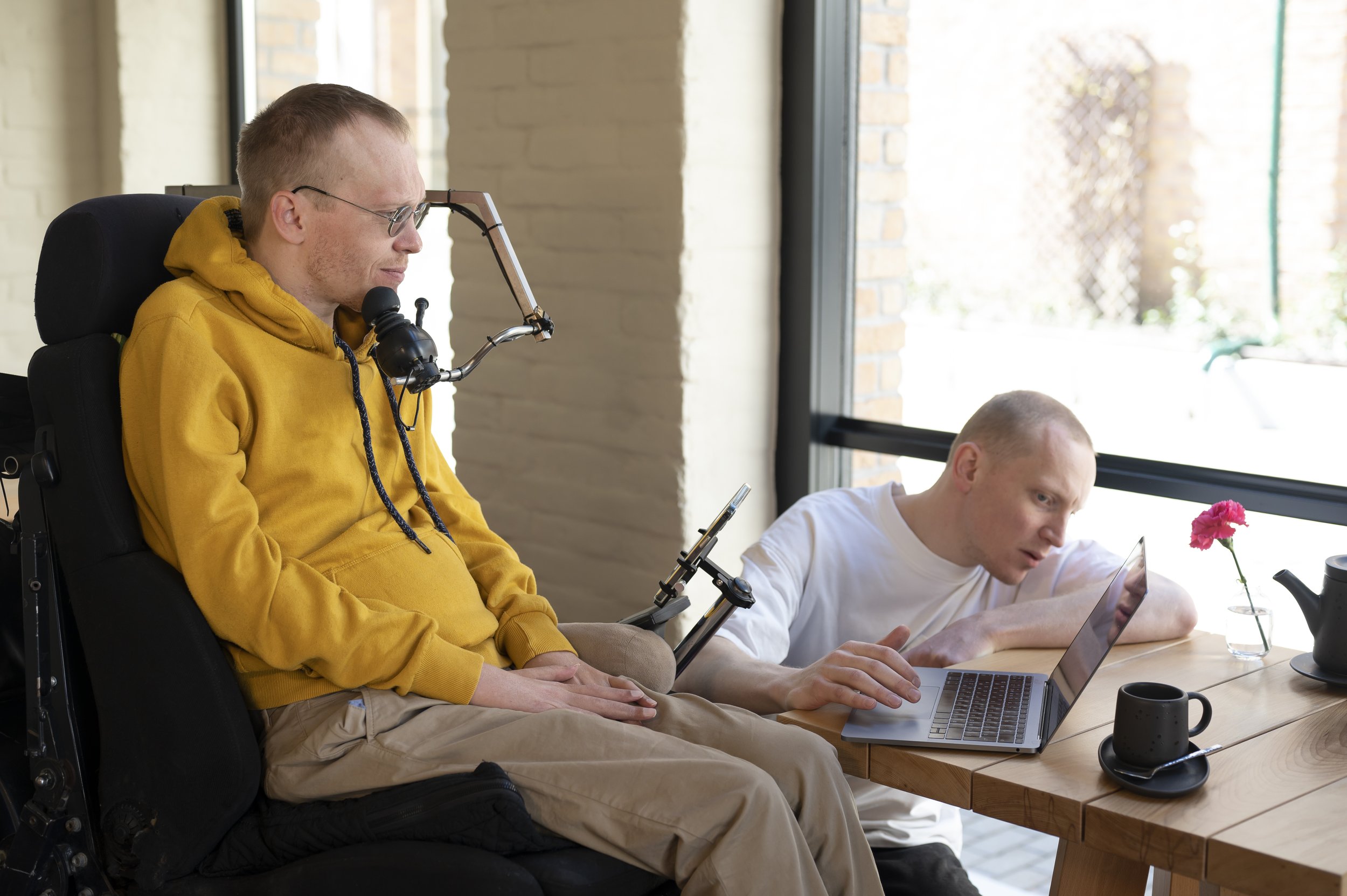
Communication is about much more than meeting basic needs. It allows individuals to maintain relationships, participate in decisions, express emotions, and preserve their sense of identity. Losing the ability to communicate can be one of the most devastating aspects of neurodegenerative disease. For this reason, intervention should focus not only on managing decline but also on preserving connection.
Unfortunately, AAC is still frequently viewed as a last resort. Families and even professionals may postpone referrals until communication breakdown becomes severe. By that stage, fatigue, cognitive changes, and reduced physical abilities may make learning a new system considerably more challenging. Introducing AAC early does not mean giving up on speech. Rather, it means planning ahead and ensuring that communication remains possible throughout the disease journey. Preservation is pivotal. By acting early, individuals have the opportunity to become familiar with different communication tools, record their voice, and make choices about how they wish to communicate in the future.
Communication should not end when speech changes. With timely support and appropriate AAC intervention, individuals living with neurodegenerative conditions can continue to connect, participate, and maintain an important part of who they are.
