The Voice – How it Works and How to Take Care of It
Our voice is critical to our daily lived experiences. We use our voice on a daily basis to share our thoughts, express our feelings, and create connections with people. Our voice also gives information about our gender, age, and cultural background. Often, the quality of our voice affects how other people perceive us. Therefore, we must make sure to take care of our voice so that it can serve us well throughout our lives. To do so, we must first understand how we produce the voice.
How Does the Voice Work?
For a healthy voice to be produced, three main components are needed – the Vocal Folds, Breathing, and Resonance. Let’s have a look at each of these:
Vocal Folds
The voice is produced through a pair of muscles called the Vocal Folds. These are very small, finger-like muscles which are found in the voice box (larynx) in our throat. The vocal folds are attached to several muscles which help them to open and close in very fast cycles, causing them to vibrate.
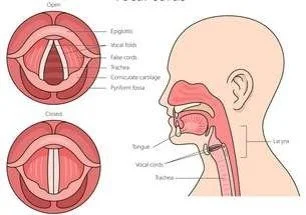
The Vocal Folds
Breathing
When we breathe in, our Vocal Folds open to let the air in through the windpipe (trachea) into the lungs. Once the air is in the lungs, our Vocal Folds close, and pressure builds up underneath them through the air trying to escape back out. That pressure of air, once released back, causes the Vocal Folds to vibrate, thereby producing voice.
Resonance
As the voice is being produced, the sound vibrates in the spaces in our nose (nasal cavity) and mouth (oral cavity). These spaces in our head amplify the sound in a similar way that speakers would amplify a sound coming from any device.
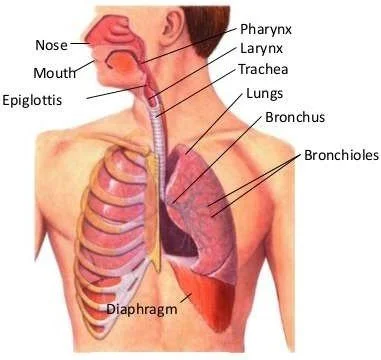
The breathing mechanism
You might notice that your voice sounds different from that of other people around you. This happens because each individual voice is unique, and the shape and size of the Vocal Folds, the lungs, and the head spaces will affect the way the voice sounds. However, just like any other part of our body, our voice can also develop problems. Try to think of the last time you had a cold. Your sinuses (i.e. nasal cavity) were probably congested, causing your voice to sound very stuffy. A change in any of the three components mentioned will affect the sound of the voice.
NEW WH-QUESTIONS RESOURCE
NEW WH-QUESTIONS RESOURCE
How will I know if I have a Problem with my Voice?
Your voice does not need to sound different from usual for you to have a problem with your voice. Usually, the first signs of a voice disorder appear much before a change in your vocal quality. Signs of the start of a voice disorder might be any combination of the following:
· A continuous feeling of dryness, soreness and/or pain in your throat
· A continuous tickling and/or burning sensation in your throat
· A continuous feeling of tightness in throat
· Feeling like you need to make an effort to speak
· Shallow breathing
· A continuous sensation of a lump in your throat
· A frequent need to clear your throat

<a href="https://www.magnific.com/free-photo/young-lady-t-shirt-jacket-touching-skin-her-neck-looking-tired-front-view_13399510.htm">Image by 8photo on Magnific</a>
If these symptoms do not last long or are very slight, then you don’t need to worry. However, if they last for more than two weeks or recur often, that is your sign to seek professional help for your voice. Luckily, there are people who can help you with this. First, you need to speak to an Ear, Nose, and Throat Specialist (ENT), who will be able to identify if there are any structural changes causing your voice problems. Then, you need to speak to a Speech-Language Pathologist (SLP) who will be able to provide exercises for your voice to help you regain a healthy voice and to reduce the risk of further vocal problems.
Fear not! Luckily, there are many things you can do in your daily life to help reduce the risk of damaging your voice. Often, a voice disorder can be easily prevented by applying simple changes to your daily routine:
1. Stay hydrated – make sure to drink enough water every day, and reduce drying substances such as alcohol, caffeine, and smoking
2. Take care of your health – watch out for acid reflux; make sure you’re sleeping well; and try to manage your stress levels
3. Watch where you’re spending your time – avoid excessively dry, smoky, or dusty environments
4. Use your voice well – avoid excessive shouting or whispering; avoid using your voice for prolonged periods without breaks
5. Warm up your voice – especially if you use your voice extensively on a daily basis – a simple vocal warm up will help prepare your voice for the vocal demands of the day, thereby reducing the risk of developing problems with your voice

Now you can go out into the world and let your voice be heard – but don’t shout of course!
References
American Speech-Language-Hearing Association (2025). Protect Your Voice This Back-to-School Season. Retrieved from https://www.asha.org/news/2025/protect-your-voice-this-back-to-school-season/?srsltid=AfmBOorCVenRYyuUgFwrNLgI4RID2SX2whJXOCxTB3XtQqMIkWXM5DqV on 7th June 2026
American Speech-Language-Hearing Association (n.d.). Voice Disorders. Retrieved from https://www.asha.org/practice-portal/clinical-topics/voice-disorders/?srsltid=AfmBOoqeZ40X76uI0Zev1vEaZSh9A_7UrE8nakYgLDi37Ity47aHN4LN on 7th June 2026
Belin, P., Bestelmeyer, P.E.G., Latinus, M., & Watson, R. (2011). Understanding Voice Perception. British Journal of Psychology, 102(4), 711-725. DOI: 10.1111/j.2044-8295.2011.02041.x
Titze, I.R. (2008). The Human Instrument. Scientific American, 298(1), 94-101. https://www.jstor.org/stable/26000381